Showing posts with label Astronomy. Show all posts

Saturday, May 03, 2008

San Francisco Bay Area from the ISS

Here's a neat image of the Bay Area taken from the International Space Station. I particularly like the visible outflow from the receding tide through the Golden Gate as well as the visible colored salt ponds in the south bay.

Photograph of San Francisco Bay
In this photograph of the San Francisco Bay area taken from the International Space Station during Expedition 4, the gray urban footprint of San Francisco, Oakland, San Jose, and their surrounding suburbs contrasts strongly with the green hillsides. ISS004-E-10288 (April 21, 2002, 105 mm lens) Click on the image for full-resolution version.

Tuesday, March 25, 2008

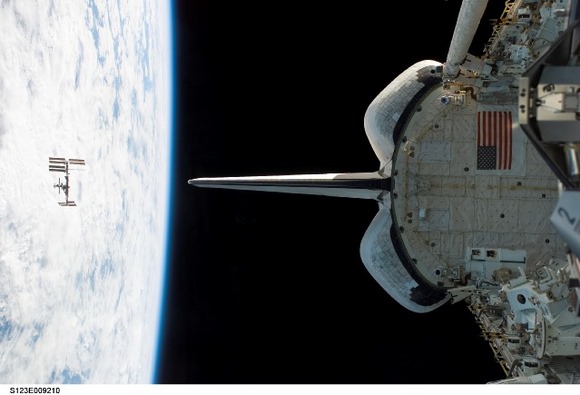
Shuttle and ISS

Shuttle Separates from the Station.  Image Credit:  NASA

Monday, March 24, 2008

Aurora from ISS

The image “http://static.reuters.com/resources/pictures/galleries/Stories/633308185815625000/Previews/032103.jpg?rpc=64” cannot be displayed, because it contains errors.
While docked and onboard the International Space Station, a STS-123 Endeavour crew member captures the glowing green beauty of the Aurora Borealis March 21, 2008. Looking northward across the Gulf of Alaska, over a low pressure area (cloud vortex), the aurora brightens the night sky. This image was taken on March 21, 2008 at 09:08:46 GMT, credit-Reuters.

Wednesday, March 05, 2008

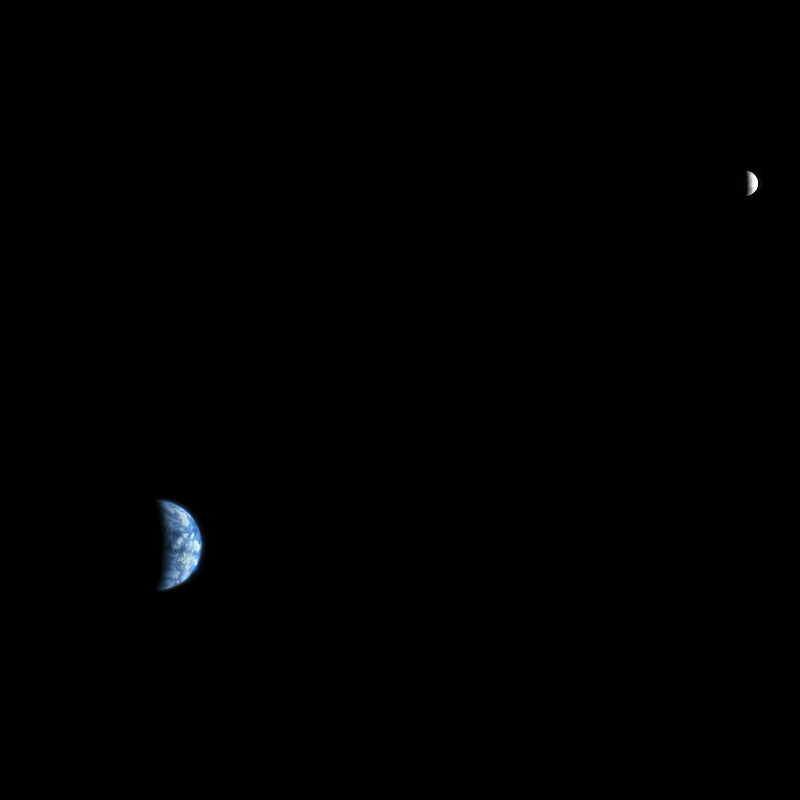
Earth As Seen From Mars

Saturday, March 01, 2008

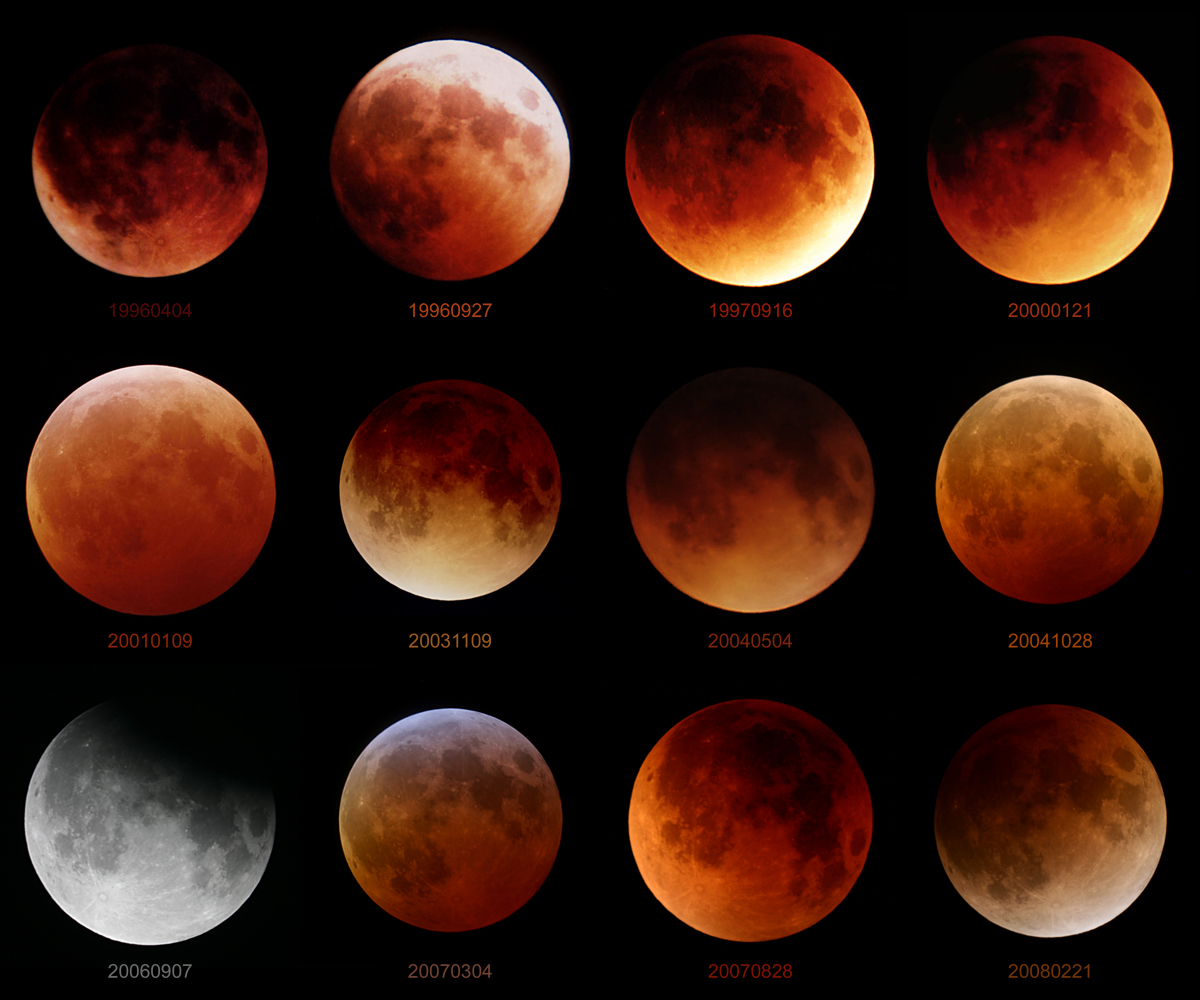
The Last Twelve Lunar Eclipses

Here's a nice montage of the 12 most recent Lunar eclipses from APOD. Click on the image for a higher-res version.

See Explanation.  Clicking on the picture will download  an mpeg movie file.

Twelve Lunar Eclipses
Credit Tunç Tezel (TWAN)

Explanation: Welcome to the extra day in the Gregorian Calendar's leap year 2008! To celebrate, consider this grid of lunar eclipse pictures - starting in leap year 1996 and ending with February's eclipse - with the date in numerical year/month/day format beneath each image. Mostly based on visibility from a site in Turkey, the 3x4 matrix includes 11 of the 13 total lunar eclipses during that period, and fills out the grid with the partial lunar eclipse of September 2006. Still, as the pictures are at the same scale, they illustrate a noticeable variation in the apparent size of the eclipsed Moon caused by the real change in Earth-Moon distance around the Moon's elliptical orbit. The total phases are also seen to differ in color and darkness. Those effects are due to changes in cloud cover and dust content in the atmosphere reddening and refracting sunlight into Earth's shadow. Of course, the next chance to add a total lunar eclipse to this grid will come at the very end of the decade.


For another nice series of images highlighting the Moon's libration (wobble and variation in orbit ) see my related post entitled "Our Constant Moon?"

Wednesday, February 20, 2008

Lunar Eclipse Tonight

Don't miss tonight's Lunar Eclipse. Otherwise you'll have to wait at least three more years to see another one.

Eclipse Diagram

More details at NASA.

Wednesday, January 09, 2008

Twinkle Twinkle Little Variable Stars

My astrophysics professors always TALKED about variable stars and how particularly important the Cepheid and RR Lyrae variables have been in helping establish interstellar and intergalactic distance scales. They would show "Light Curve" graphs like this one from McMaster University in Canada that depicted the changes in stellar brightness over time.


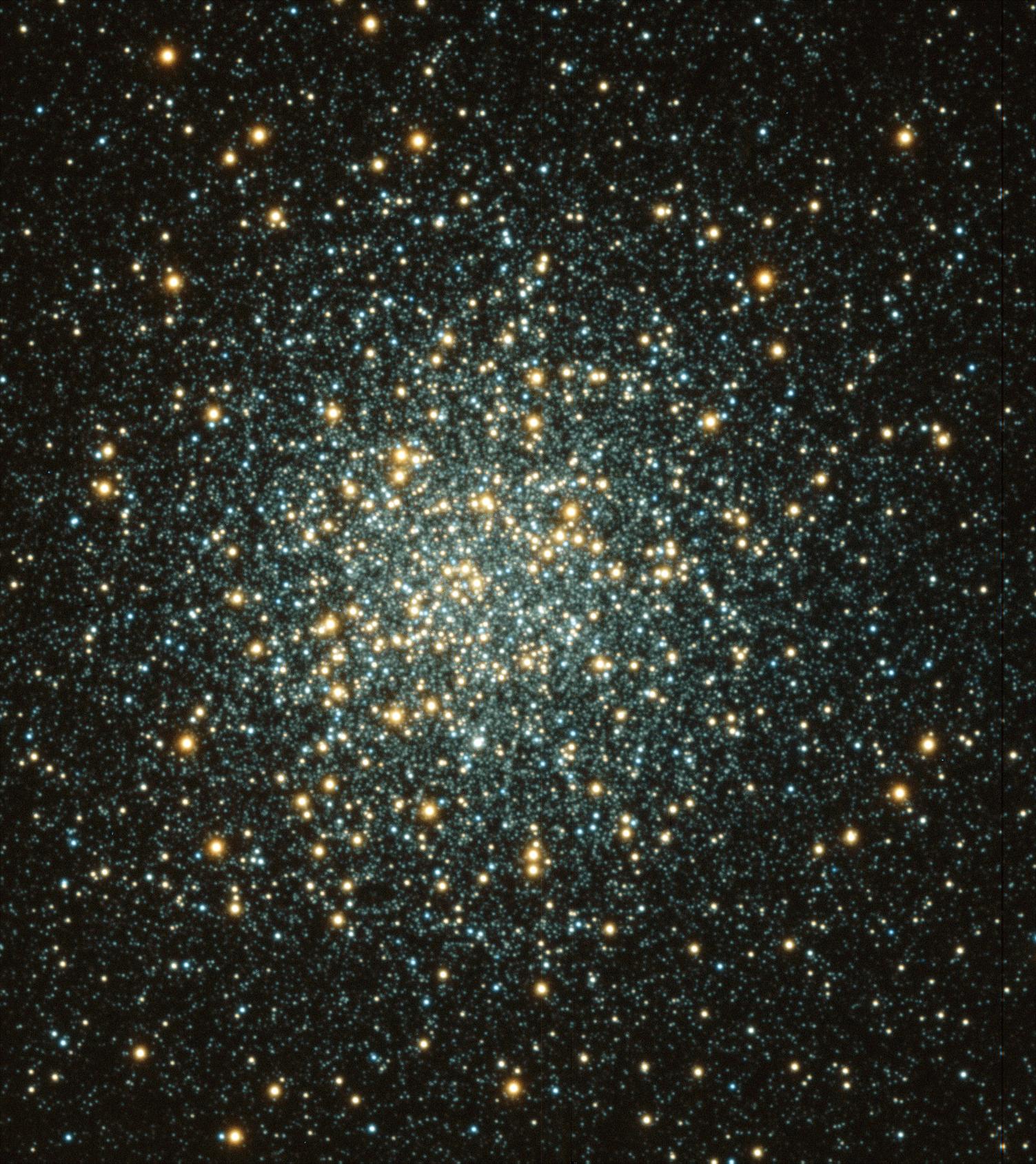
I realized intellectually, that many of the variable stars had periods on the order of a day and rather large changes in magnitude, but for some reason, nobody had taken any decent movies to really highlight the ubiquity or true visual impact of these stars. But contrast this traditional static image of the M3 Globular Cluster


See Explanation.  Clicking on the picture will download  the highest resolution version available.


with this relatively recent four-frame movie take by Krzysztof Stanek and Andrew Szentgyorgyi over the course of one night in 1998 on the 1.2 m. telescope at F.L. Whipple Observatory in Arizona.

M3 Color Movie

Wow. That really gets the idea of variable stars across. And now with the temporal information across field of view, you start to notice other things that weren't obvious before, and that leads to new questions such as, "...so why to several of the stars separated by many light years seem to flash in synchrony? What is the mechanism for synchronization?"

If you like that action, you'll love what the forthcoming LST telescope will turn out. Stay tuned for more.

Images courtesy (APOD)


Wednesday, November 28, 2007

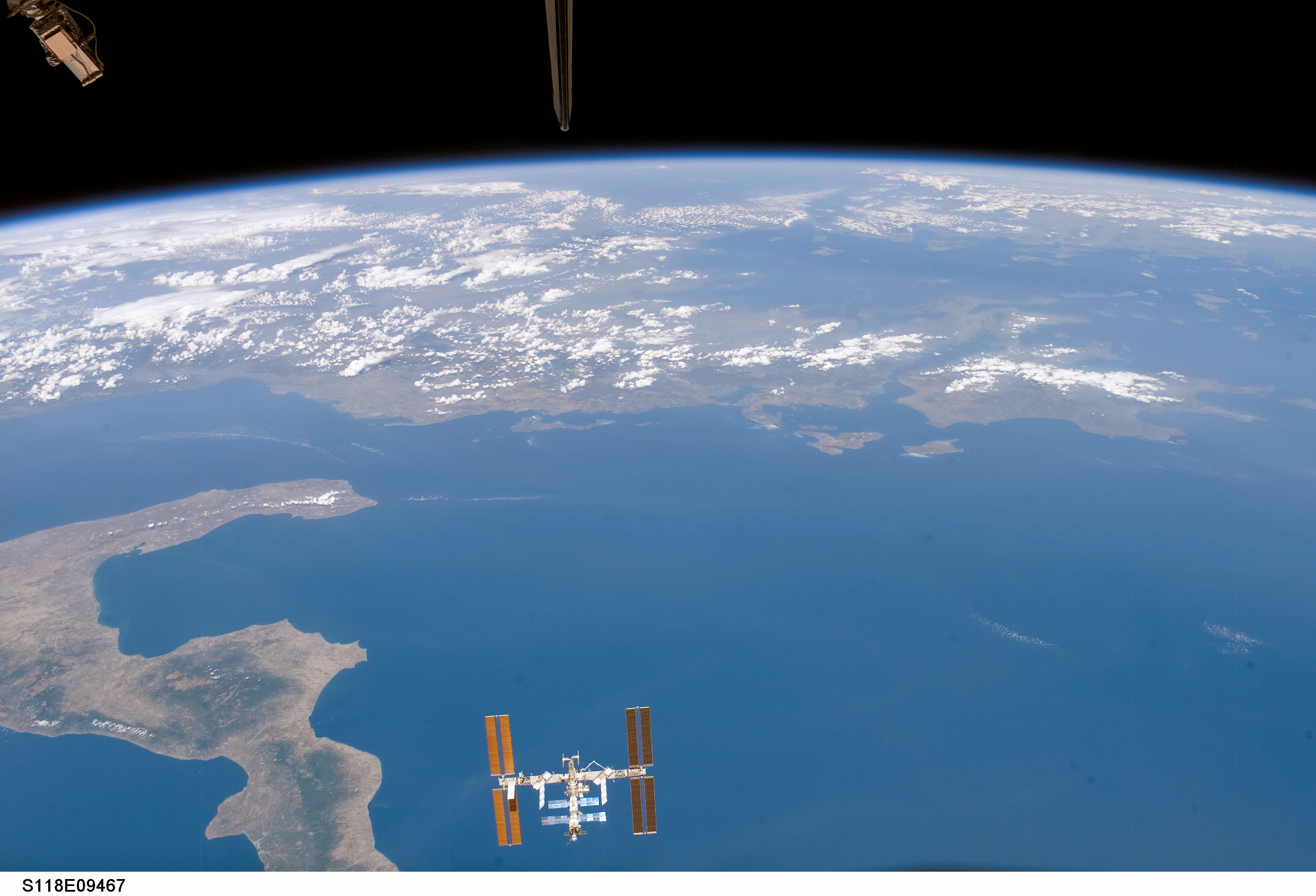
ISS over Italy and Greece

Courtesy of NASA.

http://antwrp.gsfc.nasa.gov/apod/image/0711/earth_sts118_big.jpg

Friday, October 05, 2007

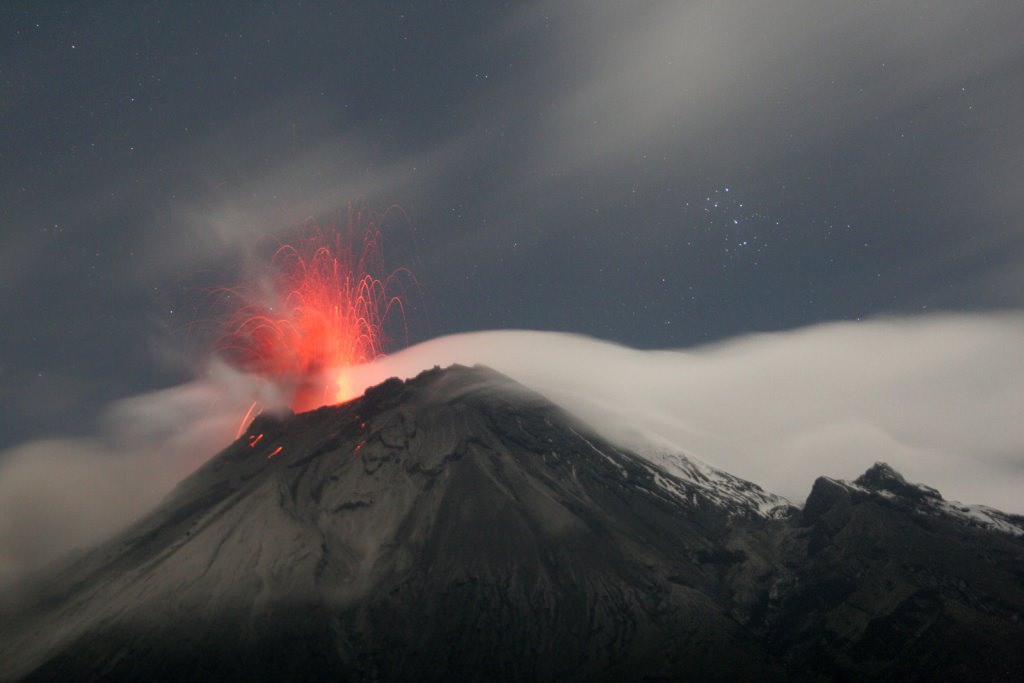
Fire on Land and In The Sky

Here's a cool photo of an exploding volcano (Tungurahua, located in Ecuador) under the Pleiades star cluster from Universe Today. Click on the image to see the full-resolution version (it's worth it!).

http://www.universetoday.com/wp-content/uploads/2007/10/blackgiant.JPG.

Sunday, June 24, 2007

More Rooms With a View on the Space Station

From APOD,

See Explanation.  Clicking on the picture will download  the highest resolution version available.

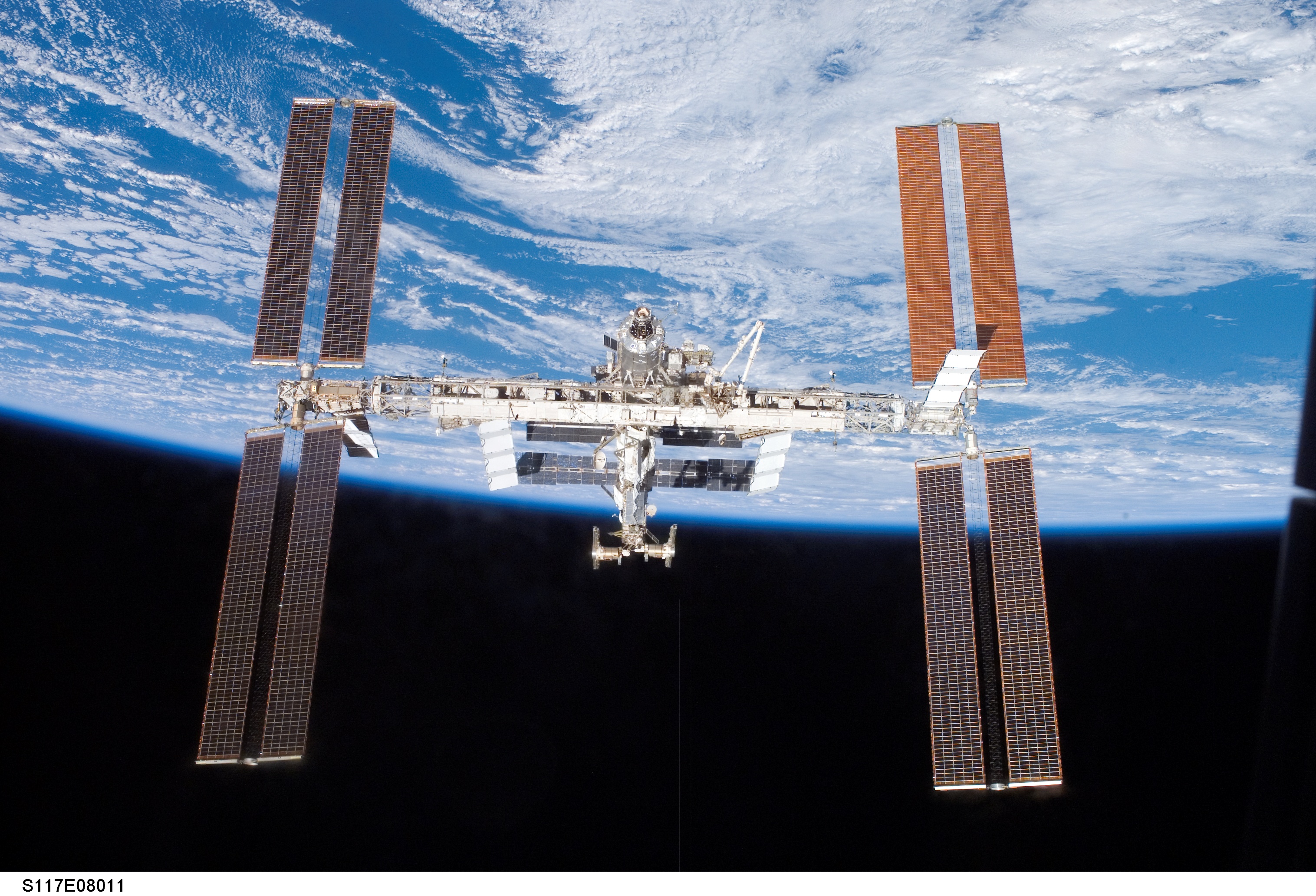
The International Space Station Expands Again
Credit: STS-117 Shuttle Crew, NASA

Explanation: The developing International Space Station (ISS) has changed its appearance again. During the past week, the Space Shuttle Atlantis visited the ISS and added pieces of the Integrated Truss Structure that mirrored those added in September 2006, including a second impressively long array of solar panels. The entire array of expansive solar panels are visible at the edges of the above image taken by the Shuttle Atlantis Crew after leaving the ISS to return to Earth. The world's foremost space outpost can be seen developing over the past several years by comparing the above image to past images. Also visible above are many different types of modules, a robotic arm, another impressive set of solar panels, and a supply ship. Construction began on the ISS in 1998.


Twilight Turtle: a Planetarium Night Light

Too cute for words. Start conditioning those young scientists early!

An Aurora from Outer Space

http://tivac.com/images/backgrounds/AuroraBorealis.jpg


Thursday, June 14, 2007

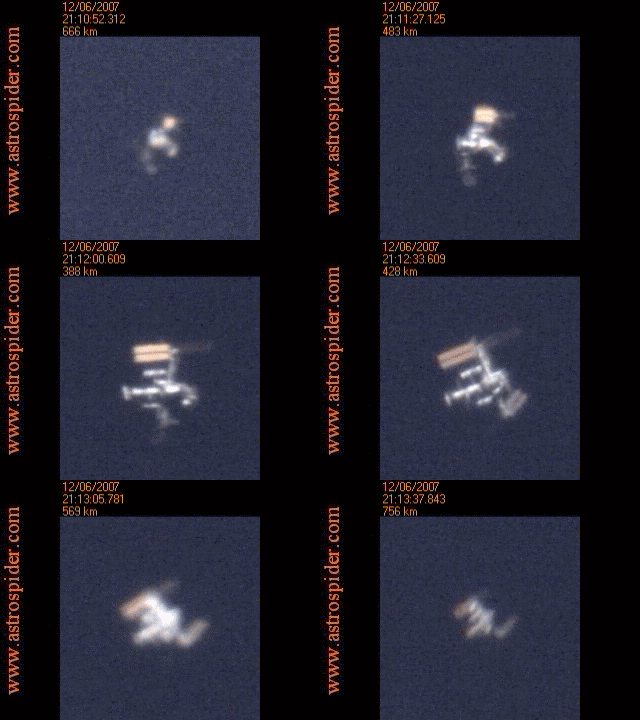
ISS Fly-by Images Taken From Earth

From Spaceweather.com:

Mike Tyrrell photographed the expanding spaceship through his 10-inch Meade LX-200. The new panels are indicated by the arrow:


The image “http://www.spaceweather.com/swpod2007/13jun07/tyrrell.gif” cannot be displayed, because it contains errors.

Meanwhile in the Czech Republic, Martin Popek photographed an "ISS flare" from his hometown of Nýdek:


http://www.spaceweather.com/swpod2007/13jun07/martin-popek-iss12.6_1181684800.jpg


http://www.spaceweather.com/swpod2007/14jun06/David-Storey-20070611_ds_1181752287.jpg


Monday, June 04, 2007

Track the Hubble Space Telescope and ISS

From the European Space Agency web site comes a nice Google Gadget mashup that shows the ground track of several noteworthy satellites including the Hubble Space Telescope [HST], and the International Space Station [ISS]. Just click on the links in the table below to see exactly where overhead any one of these satellites fly displayed on Google Maps.


Thursday, May 03, 2007

Our Constant Moon?

Most of us probably think of the Moon as our constant and reliable companion, always showing a familiar face. Popular lore has us always seeing the same face of the moon, the "bright side," with the dark side forever hidden from earthbound viewers as the moon orbits in lock-step with the Earth's rotation.

But as with much of science, the tricky little details reveal a more interesting picture. Here is a short animation sequence taken by Laurent Laveder in France that is comprised of full moon images captured every (lunar) month for two years, all compressed into 2 seconds of video.

The image “http://www.spaceweather.com/swpod2007/02may07/laveder_512.gif” cannot be displayed, because it contains errors.

This video is a fantastic articulation of the fact that the Moon's orbit around Earth is not, in fact, a perfect circle, but rather an ellipse (with about 5% eccentricity) which travels closer and then farther away in turn and changing apparent size in the process. The orbit is tilted slightly with respect to Earth's daily planetary rotation, presenting slightly varying angles, and there is obviously some wobble in the orbital path, which astronomers call libration. In total, we actually see somewhere closer to 59% of the Moon over time rather than what the pedestrian 50% bright-side model would offer.

Keep in mind that this was a two-YEAR project to take and assemble and process all the monthly images.

Click to enlarge 1152 x 768 pixels (212 ko)

Wikipedia has a great page with more details on the orbit of the Moon, and a hat-tip to Spaceweather.com for the links.

Wednesday, May 02, 2007

Stunning Panorama of Carina Nebula

While I may have posted not too long ago about the inevitable obsolescence of the Hubble Space Telescope, the old girl still impresses. NASA recently released the largest-ever visible image panorama on the 17th anniversary of the telescope.

The incredible detail is simply stunning, and exposes the process of stellar evolution as never before seen. Here are a few of the images, but do be sure to click through to the NASA site in order to see them in all their massive native-resolution glory.

The image “http://www.spacetelescope.org/images/screen/heic0707a.jpg” cannot be displayed, because it contains errors.

Hubble's view of the Carina Nebula shows star birth in a new level of detail. The fantasy-like landscape of the nebula is sculpted by the action of outflowing winds and scorching ultraviolet radiation from the monster stars that inhabit this inferno. In the process, these stars are shredding the surrounding material that is the last vestige of the giant cloud from which the stars were born.

The immense nebula is an estimated 7,500 light-years away in the southern constellation Carina the Keel (of the old southern constellation Argo Navis, the ship of Jason and the Argonauts, from Greek mythology).

This image is a mosaic of the Carina Nebula assembled from 48 frames taken with Hubble Space Telescope's Advanced Camera for Surveys. The Hubble images were taken in the light of ionized hydrogen. Colour information was added with data taken at the Cerro Tololo Inter-American Observatory in Chile. Red corresponds to sulfur, green to hydrogen, and blue to oxygen emission. Credit: NASA, ESA, N. Smith (University of California, Berkeley), and The Hubble Heritage Team (STScI/AURA)


http://www.spacetelescope.org/images/screen/heic0707b.jpg

[Left] -- A towering "mountain" of cold hydrogen gas laced with dust is the site of new star formation in the Carina Nebula. The great gas pillar is being eroded by the ultraviolet radiation from the hottest newborn stars in the nebula.

[Right] -- A close-up look at the peak of one of these "pillars of creation" reveals unequivocal evidence that stars are being born inside the columns. A pencil-like streamer of gas shoots out in both directions from the pillar and ploughs into surrounding gas like a fire hose hitting a wall of sand. The jet is being launched from a newly forming star hidden inside the column. A similar jet appears near the bottom of the image. These stellar jets are a common signature of the birth of a new star. Credit: NASA, ESA, N. Smith (University of California, Berkeley), and The Hubble Heritage Team (STScI/AURA)


http://www.spacetelescope.org/images/screen/heic0707c.jpg

A series of so-called Bok globules from a mosaic of the Carina Nebula assembled from 48 frames taken with the Hubble Space Telescope’s Advanced Camera for Surveys. The island-like clumps of dark clouds scattered across the nebula are nodules of dust and gas that have so far resisted being eaten away by photoionisation.

One globule nicknamed the "caterpillar" is shown in the central image. Its glowing edge indicates that it is being photoionized by the hottest stars in the cluster. It has been hypothesized that stars may form inside such dusty cocoons. Credit: NASA, ESA, N. Smith (University of California, Berkeley), and The Hubble Heritage Team (STScI/AURA)


http://www.spacetelescope.org/images/screen/heic0707d.jpg

These three snapshots reveal nuggets of cold molecular hydrogen in the Carina Nebula. This Hubble Space Telescope view of the central region of the Carina Nebula reveals a violent maelstrom of star birth. The fantasy-like landscape of the nebula is sculpted by the intense pressure of starlight from monster stars and their accompanying star clusters, as well as the hydrodynamics of their stellar winds of charged particles.The glowing edges of some of these objects indicates that they are being photoionized by the hottest stars in the cluster. It has been hypothesized that stars may form inside such dusty cocoons. Credit: NASA, ESA, N. Smith (University of California, Berkeley), and The Hubble Heritage Team (STScI/AURA)


http://www.spacetelescope.org/images/screen/heic0707e.jpg

[top] - An approximately one-light-year tall "pillar" of cold hydrogen towers above the wall of the molecular cloud. The 2.5-million-year-old star cluster called Trumpler 14 appears at the right side of the image. A small nugget of cold molecular hydrogen, called a Bok globule, is silhouetted against the star cluster.

[middle] – Detailed view of the central portion of the Carina Nebula near the so-called Keyhole Nebula.

[bottom] – These great clouds of cold hydrogen resemble summer afternoon thunderheads. They tower above the surface of a molecular cloud on the edge of the nebula. So-called "elephant trunk" pillars resist being heated and eaten away by blistering ultraviolet radiation from the nebula’s brightest stars.

Credit: NASA, ESA, N. Smith (University of California, Berkeley), and The Hubble Heritage Team (STScI/AURA)

Monday, April 30, 2007

Saturn in Sunlight

Cassini just keeps on chugging. From the NASA site:

Saturn and its stunning rings
Such a view is only possible from the Saturn-orbiting Cassini spacecraft. This view looks toward the unilluminated side of the rings from about 33 degrees above the ringplane. Shadows of the innermost rings are cast upon the planet at upper left. The edge of Saturn's shadow cuts a straight line across the rings near upper right.

The image was taken in visible light with the Cassini spacecraft wide-angle camera on March 30, 2007 at a distance of approximately 1.9 million kilometers (1.2 million miles) from Saturn. Image scale is 117 kilometers (73 miles) per pixel.

For more information about the Cassini-Huygens mission visit http://saturn.jpl.nasa.gov . The Cassini imaging team homepage is at http://ciclops.org .

Credit: NASA/JPL/Space Science Institute

Saturday, March 24, 2007

Surpassing Hubble from the Ground

Several friends have asked me recently what I thought of the eventual, and possibly imminent, decommissioning of the Hubble Space telescope, arguably one of the preeminent scientific instruments of the last century. My reply describing wondrous past utility now becoming obsolete was almost always met with stark surprise. Wasn't Phillip supposed to be the champion of all things space and astronautics?

Well, for all you space telescope traditionalists, witness the future today. Last week, there was a release from the Gemini Observatory in Hilo, HI that included images even the Hubble telescope couldn't have taken, and they were taken from the ground, through the earth's atmosphere.


The Gemini observatory images combined optical and infrared wavelength images of the Pillars of Creation area of the Orion nebula. The really interesting new data refutes one of the earlier theories that hot energetic starts were blowing dust and matter off of several proto-stellar objects to form the dusty pillars. Gemini's latest data shows that there was a violent explosion from below the lower left corner of the image that ejected several large objects (shown in blue from the hot and energetic iron gas emissions) that are leaving wakes of energized hydrogen gas shown in orange.


The innovation that made this type of image quality possible from the ground, even through the distortion due to the Earth's turbulent atmosphere is called adaptive optics. An actuated deformable mirror is manipulated to introduce the inverse distortion from an image of a very tiny or point source of bright light which has passed through the atmosphere. Here is a diagram of the system used by Gemini.
AO Schematic Illustration
From the Gemini site: A schematic of how an adaptive optics systems, like Altair on Gemini North, works to correct distorted starlight. The illustration (1) is an example of a blurry image taken without the help of adaptive optics. When starlight is collected and focused by the telescope, just prior to coming to a focus, the light entering an adaptive optics system is first collimated (2) and is reflected off a deformable mirror (3). After reflecting off the deformable mirror, the light passes through a beam-splitter (4) where the shorter wavelength light (optical) enters the wavefront sensor (5) which takes a "snapshot" of the distortions on the wavefront and sends the information via a computer (6) to the deformable mirror to keep the wavefronts corrected and flat. Finally, the light is focused (7) and imaged on a detector (8) for astronomers to study.
When there is no bright star in the field of view, the Gemini system uses a laser that targets the ionosphere to create an artificial star. Here is an image of the system in operation.


I can't wait to see what else this system comes up with.
Do check out their web site for all the details: Gemini observatory.


Sunday, March 18, 2007

Chandra Reveals Thousands of Black Holes

NASA's Chandra X-Ray observatory in orbit is racking up quite a record of groundbreaking discoveries this year. After enabling the verification of Dark Matter earlier this year, Chandra's latest mission peered through interstellar dust and obscuration that have historically plagued visible light instruments to discover over 1000 Black Holes in a patch of the sky about the size of a paperback book held at arm's length.

Each of the colored dots in the field below (taken in the constellation Bootes) is a direct image of a black hole that lies at the center of a remote galaxy (hence the name "Active Galactic Nuclei" [AGN]).

Chandra image of a region of the Bootes constellation

X-Ray astronomers are already all stirred up about the fact that the prevailing theories on Black Hole formation and light emission are now being called into question by this new data. In our latest theories, matter falling into Black Holes would emit light as it sheds angular momentum while falling into the hole, to result in a bright torus (donut) of orbiting matter.

The image “http://www.nasa.gov/images/content/150639main_j1655_ill_disk.jpg” cannot be displayed, because it contains errors.


Animation Published by:
Goddard Space Flight Center

Date Published: April 30, 2001
Official ID:blackholebinary1


Animation from Harvard's Chandra center.

But Chandra's latest survey doesn't show the distribution of brightness we would expect from over 1000 donuts of orbiting material oriented randomly around 1000 Black Holes. Stay tuned while the astronomers figure out what is really going on!

Read all the details from the Chandra Web site, and learn more about Black Holes here.

Tuesday, March 13, 2007

Stereo-B Warming Up

If these first test shots from NASA's Stereo-B satellite are any indication of what more is to come, the future is bright indeed. NASA's Stereo Satellite pair is now in orbit around the sun, both leading and lagging the earth in order to capture stereo views of solar activity.


Animated view of STEREO's orbit

The first official images are expected in April, but on the warm-up run, Stereo-B captured an amazing series of images of a lunar transit across the face of the sun. (Note that the moon looks smaller than a typical solar eclipse because Stereo-B is much farther from the moon than the earth, while at a similar distance from the sun.)

STEREO eclipse movie
See the movie: small, medium or large.

All images courtesy of NASA. Click here for all the details.