Thursday, November 29, 2007

I Want Half!

An important milestone was reached today. Roughly half of the human race has a cellphone account. It's actually somewhat less, since many countries average more than one mobile phone per person, over 3.3 BILLION mobile phone accounts across the globe....but still. Wow. Now to outfit them all with live TV!

Read more here.

Wednesday, November 28, 2007

Our Conflicted Government

Sometimes the right picture is worth more than a thousand words. There's a fine art to representing data to clearly illuminate an issue, and this one takes my nomination for the graph of the year. This graphic comparing our government's nutritional recommendations to its actual spending tells the story of money (from lobbyists) over morals.

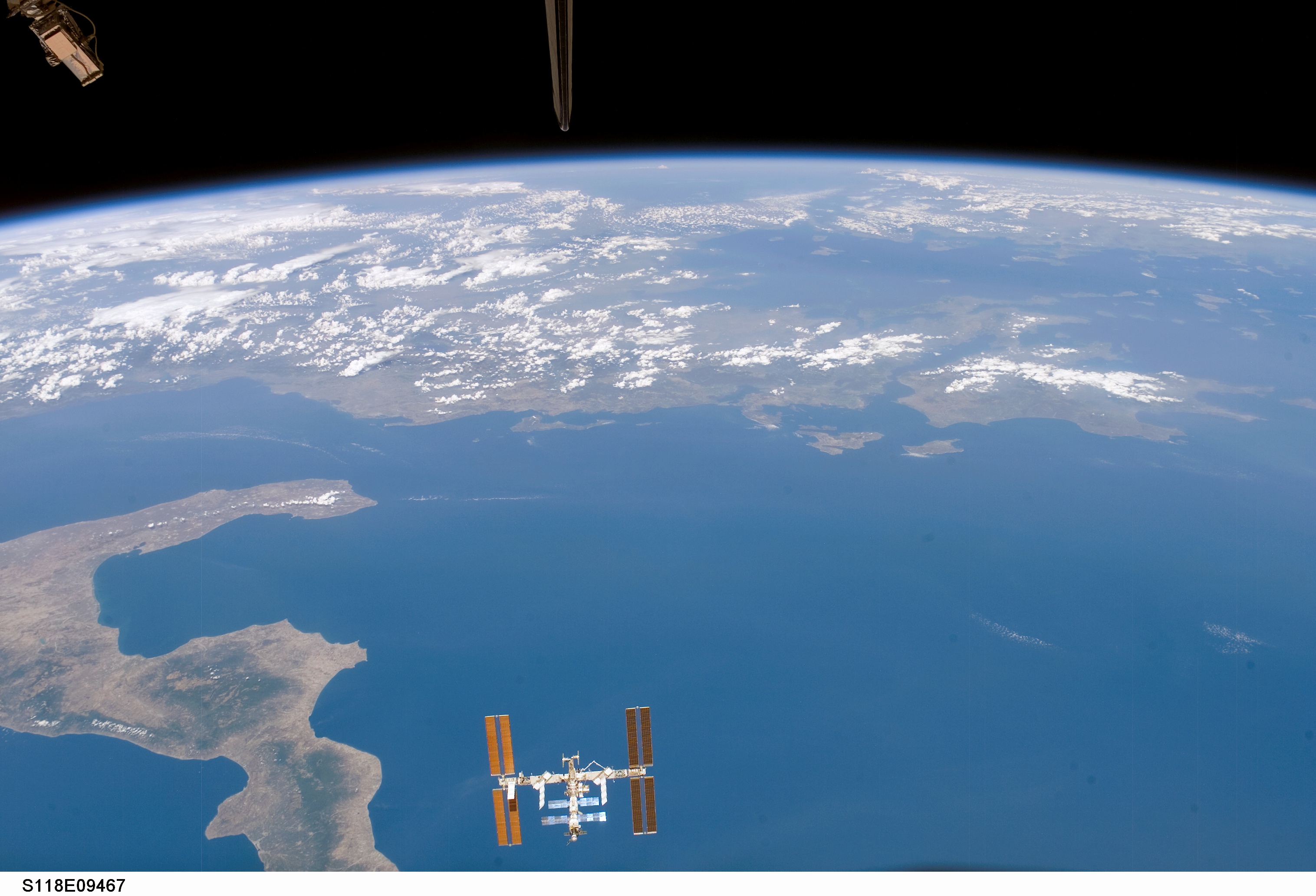
ISS over Italy and Greece

Courtesy of NASA.

http://antwrp.gsfc.nasa.gov/apod/image/0711/earth_sts118_big.jpg

Sunday, October 21, 2007

The "Dog's Nuts" of the Periodic Table

Shelly Batts over at Retrospectacle just turned me on to this great show called Brainiacs. Here are a couple of fine videos starting off with a bit on alkali earth metals. I think Shelly is right, a British accent does lend an air of legitimacy. Kind of. Ahem. Don't try this at home.


Try a YouTube search on Brainiac for more.

Thursday, October 18, 2007

Great Bubble Demos and Formula

Several people have asked me recently about bubble solution formulations that improve on the regular dish soap stand-by. Take a look at this video to see some truly resilient, and even self-healing bubbles, along with the complete formulation!


Go forth and study bubble science!

Sunday, October 07, 2007

Fine Art Photoshop Contest

Yes, my favorites are all irreverent, but I just can't resist. Check out the growing collection at the Fine Art Photoshop Contest posted here, where you can also see the un-retouched originals.

Following frame

Friday, October 05, 2007

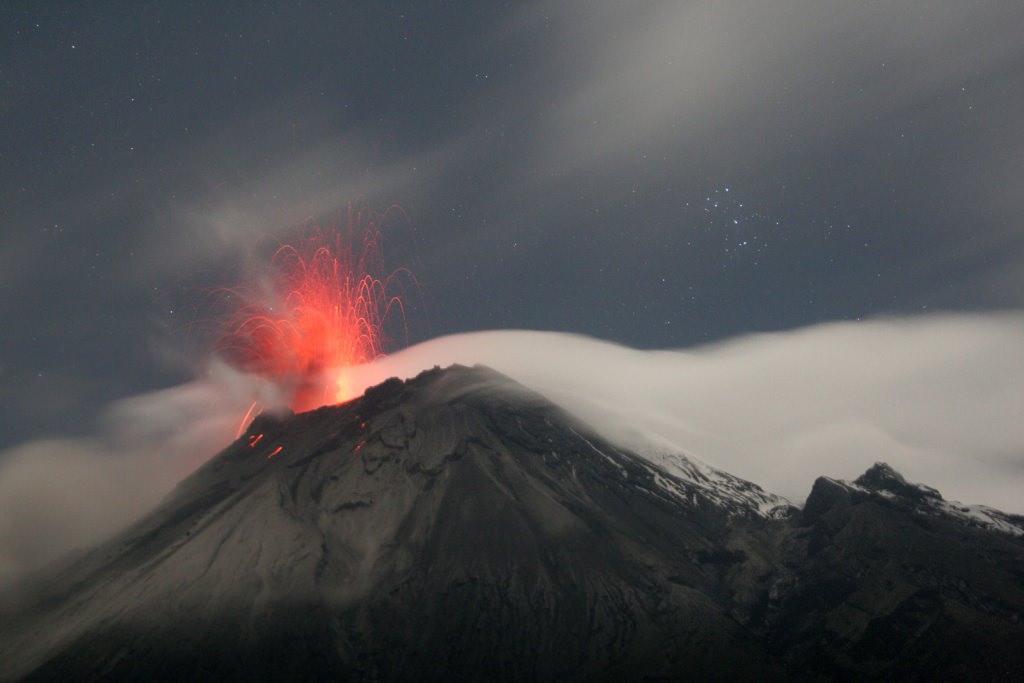
Fire on Land and In The Sky

Here's a cool photo of an exploding volcano (Tungurahua, located in Ecuador) under the Pleiades star cluster from Universe Today. Click on the image to see the full-resolution version (it's worth it!).

http://www.universetoday.com/wp-content/uploads/2007/10/blackgiant.JPG.

Nikon Small World Image Contest Results: 2007

Nikon just posted the results from their annual photo micro-graph competition, and the winning images are simply stunning. One of the things that struck me about this year's images was the significant leap in imaging technologies based on florescent DNA tagging combined with the use of confocal microscopy and volumetric tomography, even over last year's images.

I really enjoyed browsing the Nikon site, going back in time, to see how science has advanced over even a couple of years. Clearer vision brings clearer insight, as they say; these images let us see things never seen before and witness processes first-hand that were mere hypothesis last year. More than insight, there is wondrous beauty and complexity in every image. Here are a few of my favorites from the 2007 gallery, but don't miss browsing the rest on the home site.


Zebrafish embryo midbrain and diencephalon showing neural fibers in blue and developing neural interconnections in red, by Michael Hendricks of the Temasek Life Sciences Laboratory, National University of Singapore.


Erpobdella octoculata (fresh water leech) muscle strands surrounding a central nerve cord at 25x magnification, by Vera Hunnekuhl, Department of Zoology, University of Osnabrück, Osnabrück, Germany


current image
Giant unilamellar and multilamellar vesicles (liposomes) at 40x magnification, by Dr. Jorge Bernardino de la Serna, MEMPHYS-Center for Biomembrane Physics, University of Southern Denmark, Odense, Fyn, Denmark.


Trematode sp. (parasitic worm) at 400x magnification, by Rodrigo Mexas, Oswaldo Cruz Foundation, Rio de Janeiro, Brazil.


current image
Lime tree leaf vessels architectonics at 60x magnification, by Dr. Josef Spacek, University Hospital, Department of Pathology, Charles University Prague Faculty of Medicine Hradec Kralove, Hradec Kralove, Czech Republic.


current image
Cancer Cells at 1500x magnification, by Tomasz Szul, High Resolution Imaging Facility, University of Alabama at Birmingham, Birmingham, Alabama, USA.

Wednesday, October 03, 2007

A Nice Visual Illusion

No, this one is not animated. All the motion is happening in your head. If you don't believe me, try covering most of the image with your hand or a piece of paper and only looking at a small part. You will see that no individual part of the image moves at all. It is only when you try to see the whole image that you notice motion.


So can any of you tell me how this works?

Science and the Islamic World

I just stumbled upon a fascinating article on Science in the Islamic World, by a Pakistani scholar named Pervez Amirala Hoodbhoy at PhysicsToday.org. The article is mostly an exploration of the rise and fall of scientific inquiry in the Islamic states and the attendant root causes. There are clearly lessons here even for Western states that face rising tides of fundamentalism and calls for conformity, religious or otherwise.

The author doesn't skip a beat as he calls out the similar US trends surrounding religious conservatives and their push for Creationism, Intelligent Design, curbs on genetic research, and so on.

But there are also some interesting tidbits on the technologies for daily living in the Islamic world, and how they have penetrated largely in support of the religions which otherwise strive to limit their spread.

"...while driving in Islamabad, it would occasion no surprise if you were to receive an urgent SMS (short message service) requesting immediate prayers for helping Pakistan's cricket team win a match. Popular new Islamic cell-phone models now provide the exact GPS-based direction for Muslims to face while praying, certified translations of the Qur'an, and step-by-step instructions for performing the pilgrimages of Haj and Umrah. Digital Qur'ans are already popular, and prayer rugs with microchips (for counting bend-downs during prayers) have made their debut."

A great read start-to-finish.

Friday, September 28, 2007

What a difference 20 Years Makes: 1GB Then and Now

http://sd4.sd-lj.si/diggit/20yago.jpg


Wednesday, September 26, 2007

Man Survives Chair Leg Penetrating Eye and Throat

I don't usually like to post morbid stories, but this one takes the cake as far as medical miracles go.

Hat tip goes to BoingBoing on catching this one.

Here is an MRI image of a fellow who survived having a metal chair leg impale his skill through his eye socket all the way down to his throat. Not only did he survive, it looks like he will keep his vision. He's even forgiven the fellow who threw the chair!


 Ffximage 2007 04 19 Jtskull Wideweb  470X285,0

Tuesday, August 28, 2007

Only In Japan: Rice Paddy Art

You've heard of crop circles? Well, here's the Japanese version made of living plants. By patterned planting of four different varieties of rice plants, each with different colored leaves, Akio Nakayam and friends grew these reproductions of the Edo-period prints. Wow.

News photo

News photo

News photo

News photo

Tuesday, August 14, 2007

How Nerds Eat

I just stumbled on a great post from Julieanne over at Cosmic Variance.

"My temporary officemate runs down to the vending machine and buys a bag of gummi bears. He dumps them on the desk, sorts them by color, and then proceeds to eat them in order of increasing bin size (i.e. the pile of 1 orange one, then the pile of 3 yellow ones, then the pile of 4 green ones, etc).

If I buy a bag of M&M’s, I sort them by color, then figure out a division that lets me arrange them in a triangle, with one color per horizontal row, but allowing colors to be repeated (i.e. it’s ok for 9 red M&M’s to show up as a row of 7, and then further up, a row of 2). I then eat off each diagonal, producing a progressively smaller triangle, but one that maintains the horizontal color structure till the tasty end.

My kids, who I suspect inherited a geek-streak a mile wide, also sort multicolored candy into patterns and make up an algorithm for eating it.

The non-scientists who I have asked about this habit look at me like I’m nuts. (So do people who grew up in large families, because someone was bound to snarf the candy before they could take the time to develop this particular neurosis.)"

One of my personal favorites on the candy consumption side is to conduct natural selection experiments with M&Ms. I like to take two M&M's and squeeze them together until one fails structurally, and then I eat the failure, setting aside the victor to participate in the next round of trials. The winner of the single elimination tournament is the most fit M&M prototype for future generations. The superior M&M is always the last to be eaten.

I am also known to organize my French Fry consumption by waiting just until the smallest fries reach the perfect temperature, and then eating them in order of increasing size, catching each one as it passes through the optimal temperature (for the layman, the higher surface area-to-volume ratio of the smaller fries means that they cool faster.)

My wife does, in fact, think I'm nuts, though she seems to find it endearing in some odd way.

Climate Change Update

It's been a while since I've posted on this topic, and in the meantime, a few more juicy tidbits have emerged that I thought warranted attention.

The general trend of recent news and data around the melting of the polar ice caps is not a good one. In fact, the recent data shows that the thinning and melting of the western Arctic sea ice in particular is progressing more than 3 times faster than even the most pessimistic of climate models projected. According to William Chapman, et. al. at the University of Illinois, this melting is progressing so swiftly now, that:
Today [August 9, 2007], the Northern Hemisphere sea ice area broke the record for the lowest ice area in recorded history. The new record came a full month before the historic summer minimum typically occurs. There is still a month or more of melt likely this year. It is therefore almost certain that the previous 2005 record will be annihilated by the final 2007 annual minima closer to the end of this summer.

http://arctic.atmos.uiuc.edu/cryosphere/IMAGES/arctic.jpg

The image “http://arctic.atmos.uiuc.edu/cryosphere/IMAGES/current.anom.jpg” cannot be displayed, because it contains errors.

This new data, along with other similar results has led NASA's notable head of the Goddard Institute for Space Studies, James Hansen, to conclude that the prevalent climate models fail to account for the self-reinforcing feedback cycle that ensues from the melting ice, and as such, underestimate the rate at which the melting will likely occur.

Hansen warns (read Hansen's full article on Sea Level Rises at New Scientist) that the likely results of ice faster-than-expected melts are huge rises in Sea levels. Hansen notes:
"Sea level is already rising at a moderate rate. In the past decade, it increased by 3 centimetres, about double the average rate during the preceding century. The rate of sea level rise over the 20th century was itself probably greater than the rate in the prior millennium, and this is due at least in part to human activity."

Worse yet, is the very real possibility of runaway collapse.

"..the primary issue is whether global warming will reach a level such that ice sheets begin to disintegrate in a rapid, non-linear fashion on West Antarctica, Greenland or both. Once well under way, such a collapse might be impossible to stop, because there are multiple positive feedbacks. In that event, a sea level rise of several metres at least would be expected.

As an example, let us say that ice sheet melting adds 1 centimetre to sea level for the decade 2005 to 2015, and that this doubles each decade until the West Antarctic ice sheet is largely depleted. This would yield a rise in sea level of more than 5 metres by 2095."

Hansen seems convinced that the most recent data on historical temperatures is more accurate than earlier research, and places our current global temperature within 1 degree of its highest temperature in the past million years, making the horrific prospect of a 5 meter increase in sea levels seem much more ominous.

He concludes:

"The broader picture strongly indicates that ice sheets will respond in a non-linear fashion to global warming - and are already beginning to do so. There is enough information now, in my opinion, to make it a near certainty that business-as-usual scenarios will lead to disastrous multi-metre sea level rise on the century time scale."
According to Jeremy Weiss and Jonathan Overpeck at the University of Arizona, here is what Florida and the Netherlands would look like within 100 years under this scenario.

http://environment.newscientist.com/data/images/ns/cms/mg19526141.600/mg19526141.600-2_861.jpg


http://environment.newscientist.com/data/images/archive/2614/26141603.jpg

One would think that large-scale government action should be inevitable at this point. How can we get our nation in gear?

Saturday, July 28, 2007

Peel an Egg in 5 Seconds, Updated

Update September 8, 2007:

I happened to walk into our kitchen the other morning to discover my wife and a friend chatting over a late breakfast. I said my normal hellos and good mornings but really intellectually engaged at the time. But as I was turning around to go back to my home office, our friend picked up a hard-boiled egg (the first hard-boiled egg I had seen since originally posting the video below) and was preparing to start peeling it.

I have to admit that she dealt with it rather well when I leaped across the kitchen to snatch the egg from her grip before she could begin to break the shell. When everyone had recovered from my surprise leap, largely I suspect in allowance of my somewhat regular odd (nerdly) behaviors, I asked her "how long do you think it would take you to peel this egg?"

"A few minutes," she responded.

I then asked, "what would you say if I told you I could to do it in under 5 seconds?"

"No. Way."

"Time me." I used the technique pictured below. It took 3.5 seconds.

10 seconds of stunned silence followed, whereupon she shouted, "That was TOTALLY COOL!"

Ah yes. Nerd pride.


Thursday, July 26, 2007

4th Grade Math Genius Calculates High Probability of Getting Beat Up

The title says it all. I almost couldn't stop laughing and crying at the same time.


“First, I computed my annoyance ratio to determine the probability that each student would want to beat me up,” said Mosley. “Then I gauged that against the Beatings to Hand Raises Theory along with past historical data from my previous physical assaults.”

“The probability of me remaining this smart, let alone becoming slightly smarter, is very high,” said Mosley. “Given that, getting beat up within the month is an expected result. Furthermore, when taking into account my small stature proportional to the most likely inflictors of given beating, I’m estimating a 30 percent chance of a broken bone.”
Hat tip to The Giant Napkin.

Tuesday, July 24, 2007

Rocketcar Day

Usually when one of our model rockets went sideways in the teen years, it was a problem and we were diving for cover. Here's to making a problem an opportunity! Rocketcar day!


http://www.rocketcarday.com/uploaded_images/image3145-728683.jpg

http://www.rocketcarday.com/uploaded_images/DSC_1422multiLaunchLarge-790125.jpg


http://www.rocketcarday.com/uploaded_images/IMG_3826-733751.JPG


Sunday, July 22, 2007

i-Limb Bionic Hand Video

Just in time for NBC's new series reprise of "The Bionic Woman," reality has caught up with science fiction. Watch this incredible video of the first commercial bionic hand which operates entirely using nerve impulses.


Tuesday, July 17, 2007

Photoshop at Work

Apparently, all you need to really look your hottest is Photoshop. Check out this post from Jezebel.

redbookcoveranime.gif

And don't miss the annotated step-by-step by-the-numbers summary of all the retouching that was necessary to make Faith hot.